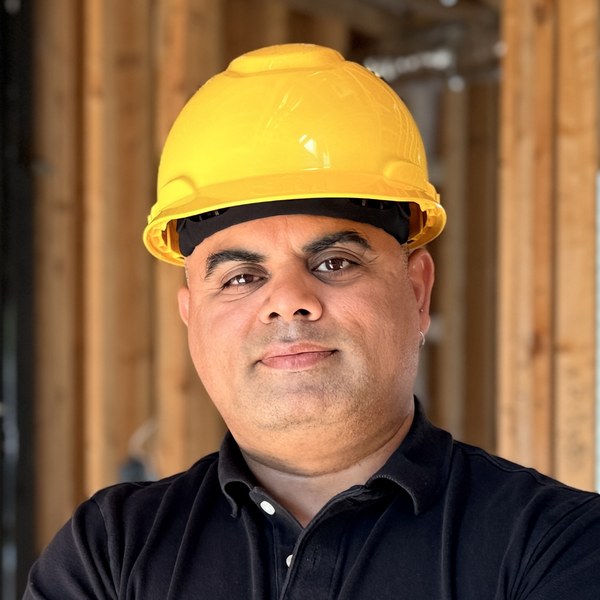
By Rahul Kumar, HCRA-Licensed Custom Home Builder & Real Estate Broker · Golden Brick Homes · Updated October 2026 · 7-minute read
Every custom-home client I’ve spoken to this year has asked me the same question: “Do we get the $130,000 HST rebate?” It’s a fair question — and for most people building in South Oakville, the honest answer is no. Here’s who actually qualifies, why the price threshold matters more than anything else, and what to do if your build falls on the wrong side of it.
What the rebate actually is
Canada and Ontario have moved to make new housing substantially cheaper by rebating the HST on newly built homes. There are two stacked programs. The Ontario Enhanced New Housing Rebate returns the provincial 8%, up to $80,000. The Ontario New Home Affordability Payment covers the federal 5%, up to $50,000. Together that is the full 13% on a $1 million home — up to roughly $130,000. That is a genuinely large number, and it is why the announcement got so much attention.
There are two separate streams, and they get confused constantly:
- The first-time home buyer stream — narrower eligibility, but a longer window, generally covering agreements entered into from spring 2025 through the end of 2030.
- The broader “all buyers” enhancement — much wider eligibility, but a tight window. The trigger depends on how you are building. Buying a finished home from a developer? It is the date the agreement of purchase and sale is signed, and that must fall between 1 April 2026 and 31 March 2027. Own the lot and hiring a builder? It is the date construction begins, which must fall in the same window, with the home substantially completed before 2030. That distinction catches people out, and on a custom build it is the construction date that governs.
Both streams include owner-built homes — meaning if you own the land and hire a builder to construct your home, you can be the one claiming the rebate rather than a developer claiming it on your behalf. That’s an important detail for anyone building custom, and it’s the part most articles skip.
The threshold nobody leads with
Here’s the part that matters most in Oakville, and the reason I’m writing this instead of celebrating.
The rebate is not a flat $130,000 for everyone. It’s tied to the value of the home:
- Homes at or under roughly $1 million — full relief.
- Homes between roughly $1 million and $1.5 million — still substantial relief.
- Homes between roughly $1.5 million and $1.85 million — the rebate phases down, shrinking as value rises.
- Homes at or above roughly $1.85 million — no rebate at all.
Now apply that to what we actually build here. A building lot in South Oakville trades between roughly $1.1M and $2M depending on the street and the frontage. Put a 4,000–5,500 square foot custom home on it and the finished value is comfortably north of $3 million. For an owner-built home, the rebate calculation generally looks at the fair market value of the finished home and land — which means the large majority of custom builds in this part of Oakville land above the cut-off and receive nothing.
That is not a popular thing for a builder to say. It is, however, what I tell clients before they build the number into their budget — because a family that plans around $130,000 that never arrives has a $130,000 problem eighteen months later.
So who in Oakville does qualify?
The rebate is real money for a real group of people. In our market, that tends to be:
- Garden suites and additional residential units. A secondary unit built on your existing property can fall well under the threshold — and these are exactly the projects where a five-figure rebate changes the arithmetic.
- Smaller infill builds and townhomes, where the finished value sits under $1.5 million.
- First-time buyers purchasing a new build within the price limits, using the first-time buyer stream and its longer window.
- Builds outside the highest-priced pockets — parts of Burlington, Hamilton, and further west, where the same house costs less because the land does.
If you’re in one of those groups, this is worth real planning time with your accountant. If you’re building a large custom home on a wide Oakville lot, it’s worth about five minutes of planning time — enough to confirm you don’t qualify, and then to stop thinking about it.
If you do qualify, the mechanics matter
Owner-built homes follow a different process from homes bought finished from a developer. Rather than the builder crediting the rebate at closing, you apply directly — using the CRA’s owner-built forms — after substantial completion.
Three practical things I’d tell anyone going down that path:
- Invoices, not quotes. Rebate claims are built from original invoices in the homeowner’s name. Estimates and quotes don’t count. Set up the paperwork correctly at the start of the build, not at the end.
- Keep everything for six years. The CRA can ask, and reconstructing eighteen months of trade invoices after the fact is miserable.
- Watch the deadlines. On an owner-built home the clock starts when construction begins, not when you sign with your builder — and that start has to land on or before 31 March 2027. A build that drifts a year can fall out of eligibility entirely.
One caution about timing
The CRA published firm guidance in August 2026 (GST/HST Notice 346), so the thresholds and the windows are now settled. Earlier in the year they were not, which is why contracts signed in the spring often carry clawback clauses in case a rebate assumed at signing never materialised. If you are signing now, make sure your agreement says who carries that risk. Published summaries of the thresholds and dates also differ from one another, which tells you something about how settled this is. Treat every number in this article — including mine — as a starting point for a conversation with your accountant and your real estate lawyer, not as the final word. The CRA is the authority here, and your own circumstances decide the answer.
What I’d actually do about it
If you’re planning a build in Oakville, Burlington or Mississauga, the sequence that saves people money is this:
- Find out your land’s real value first. Everything downstream — your budget, your financing, your rebate eligibility — depends on the number the lot is worth, and most owners have never been told it accurately.
- Model your finished value honestly before you fall in love with a set of drawings. That number decides whether the rebate is in your budget or out of it.
- Ask your accountant the question specifically, in writing, with your numbers — not the general question the internet answers.
- Budget as though the rebate doesn’t exist. If it arrives, it’s a bonus. If you planned around it and it doesn’t, it’s a crisis.
- Understand how the build gets funded. HST is real cash during construction whether or not a rebate arrives later, and construction lenders reimburse each stage only after it is built and inspected. See how a construction mortgage actually works.
I’m a licensed real estate broker and an HCRA-licensed custom home builder, and I’m building a 5,300 square foot home on Fourth Line in Oakville right now. I price land the way builders price it, because I build on it — and I’d rather tell you the unpopular version of the numbers before you commit than the popular version afterward.
Free rebate check
Not sure what you can claim? Send me the project.
The rebate turns on who owns the land, who built the home and what you intend to do with it once it is finished — and the paperwork has to be right the first time. Tell me the basics and I will tell you what you are likely entitled to claim and what needs documenting along the way.
One business day. No cost, and if you are not eligible I will say so plainly rather than let you find out at filing time.
Rahul Kumar — Broker, Royal LePage Certified Realty · HCRA-Licensed Custom Home Builder, Golden Brick Homes. General information, not tax advice. Confirm your position with your accountant and the CRA before filing.
Related: what it actually costs to build a custom home in Oakville in 2026, rebate included
Related: why the rebate rules differ if you build rather than buy
Frequently asked questions
Do you get the $130,000 HST rebate if you build a custom home in Ontario?
Sometimes, but most Oakville custom builds do not. The rebate is tied to the value of the finished home, not to whether the home is custom. Full relief applies at or under roughly $1 million, with still-substantial relief up to about $1.5 million, a phase-down between roughly $1.5 million and $1.85 million, and no rebate at or above roughly $1.85 million.
Do owner-built homes qualify for the HST rebate?
Yes. Both streams include owner-built homes, which means that if you own the land and hire a builder to construct your home, you claim the rebate yourself rather than a developer claiming it on your behalf. You apply directly using the CRA’s owner-built forms after substantial completion, rather than receiving a credit at closing.
What is the price threshold for the HST rebate on a new home?
Full relief at or under roughly $1 million. Still substantial relief between roughly $1 million and $1.5 million. Between roughly $1.5 million and $1.85 million the rebate phases down as value rises. At or above roughly $1.85 million there is no rebate at all. For an owner-built home the calculation generally looks at the fair market value of the finished home and land.
Does a garden suite or secondary unit qualify for the HST rebate?
Often yes. A secondary unit or garden suite built on your existing property can fall well under the threshold, and these are exactly the projects where a five-figure rebate changes the arithmetic. If that is your project, it is worth real planning time with your accountant.
What is the deadline for the enhanced HST rebate?
It depends how you are building. Buying a finished home from a developer, the agreement of purchase and sale must be signed between 1 April 2026 and 31 March 2027. Building on your own lot with a builder, the trigger is the date construction begins, which must fall in that same window, with the home substantially completed before 2030. On a custom build it is almost always the construction date that governs. The first-time home buyer stream has narrower eligibility but a longer window, generally covering agreements entered into from spring 2025 through the end of 2030.
What records do I need to claim an owner-built HST rebate?
Original invoices in the homeowner’s name. Estimates and quotes do not count, so set the paperwork up correctly at the start of the build rather than at the end. Keep everything for six years, because the CRA can ask and reconstructing eighteen months of trade invoices after the fact is miserable.
Should I budget for the HST rebate on my Oakville build?
Budget as though the rebate does not exist. If it arrives, it is a bonus. If you planned around it and it does not, it is a crisis. Model your finished value honestly first, then ask your accountant the question specifically, in writing, with your numbers.
Thinking about building — or wondering what your lot is worth as land?
I do free, confidential lot valuations across South Oakville, Burlington and Mississauga. If you are weighing a build, I will tell you what your land will carry — and whether the HST rebate belongs in your numbers — before you commit to anything.
Find out what your lot is worthBook a free 30-minute consultationCall or text (647) 772-1642
Related: join the Lot Buyer Registry to hear about building lots before they hit the market, or read the full guide to building lots in Oakville.
This article is general information, not tax, legal or financial advice. HST rebate rules, thresholds and deadlines change and depend on your specific circumstances — confirm your position with the Canada Revenue Agency, your accountant and your real estate lawyer before relying on any figure here. Rahul Kumar, Broker, Royal LePage Certified Realty, Brokerage · Licensed Custom Home Builder (HCRA), Golden Brick Homes.
One thing builders need to know
If a builder credits the rebate to a buyer at closing and the buyer turns out not to qualify, the builder and the buyer are jointly and severally liable to repay the CRA. Not the buyer alone. So if you are being offered the rebate as a credit rather than claiming it yourself, expect your builder to want eligibility documented properly — and if they do not ask, that tells you something.
There is also an anti-avoidance rule worth knowing. An agreement signed before 1 April 2026 that is later varied, altered or assigned is treated as though it was still signed before that date, so it gets no rebate. Terminating an old contract and re-signing with the same builder to capture the relief is caught as well. If you signed in the spring, talk to your accountant rather than your builder about restructuring.